
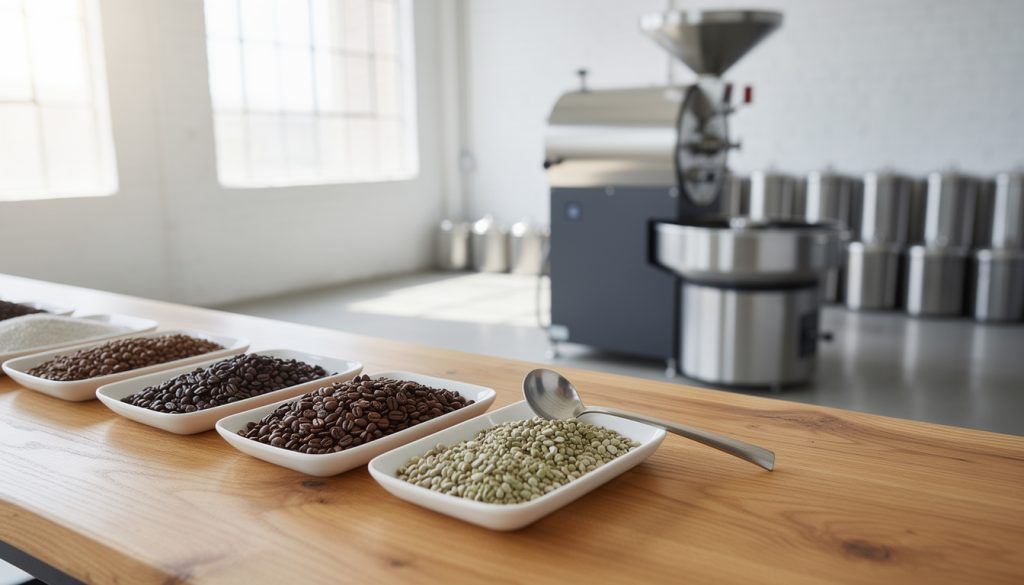
Specialty Coffee Blends for Cafes and Roasters Wholesale are purpose-built formulations engineered for flavor consistency, operational repeatability, and year-round supply in commercial settings. Specialty coffee blends wholesale programs balance cost predictability, extraction stability, and sensory appeal across high-volume espresso and filter service. The sections below cover menu matching, spec sheet interpretation, seasonal consistency, real-service evaluation, pricing and logistics, and troubleshooting.
Blend or Single Origin: What Each Wholesale Program Delivers
Single-origin coffees showcase terroir and seasonal uniqueness. Blends are built around repeatable flavor targets, a balanced acidity-to-sweetness ratio, and supply continuity across changing harvests. A typical commercial blend pairs a structured, chocolate- or nut-forward base with brighter, fruit-driven accents, and disciplined green coffee sourcing keeps that formula available at volume.
Buying a house espresso blend and commissioning a signature blend are different commitments. A house blend brings lower minimum volumes, faster onboarding, proven bar stability, and lower unit costs. A signature blend brings menu differentiation and a tailored flavor profile, but it needs a longer development cycle, higher volume commitments, and continued collaboration on seasonal adjustments. Customization makes commercial sense mainly for multi-site cafes, established roasteries, and brands with high weekly kilogram consumption and a distinct beverage position.
Which Blend Suits a Menu Built on Milk Drinks?
Roast development, the time and heat applied after first crack, governs bean porosity, solubility, and flavor balance. Espresso blends generally need slightly more development to dissolve efficiently at 9 bars without sour or astringent spikes. Filter blends gain aromatic clarity and gentle acidity from lighter development. A house espresso blend that also runs on batch brew or pour-over calls for an omni-roast profile that holds sweetness across different brew ratios and temperatures from 91 to 96 °C.
Milk pairing and milk performance describe how a blend survives steamed dairy or plant-based milk. Milk mutes delicate floral acids and amplifies caramel, cocoa, and roasted nut notes. Menus dominated by flat whites and lattes therefore favor a sensory profile with higher body and softer acidity, while black espresso menus can carry brighter, fruit-forward blends. A blend that performs within a standard espresso recipe, such as an 18-20 g dose yielding 36-44 g in 26-32 seconds, also simplifies workflow across shifts.
Spec Sheet Fields That Predict Bar Behavior
A wholesale spec sheet mixes actionable data with marketing tasting notes. Origin composition, processing methods, and physical metrics deserve the closest reading, since they explain body, solubility, and roasting behavior far better than flavor adjectives.
| Spec field | What it signals | Effect on the bar |
|---|---|---|
| Origin composition | Regional mix and share of each component | Body, acidity structure, sweetness |
| Processing methods (washed, natural, honey) | Washed gives clean structure, natural gives heavy body and higher solubility, honey bridges sweetness and clarity | Extraction predictability and cup character |
| Moisture and density | Typically 10-12% moisture in healthy green coffee | Even heat transfer during roasting |
| Screen size and defect count | Uniform bean size and few defects | Crema formation, grind distribution |
| Q grader evaluation | Independent sensory score per lot | Batch-to-batch uniformity |
| Roast color (Agtron) | Measured roast degree | Acidity and bitterness balance |
Standardized defect counting, moisture tracking, and bean sizing in the CVA protocol form the backbone of objective quality control (QC) and help predict long-term extraction stability. Roastery QC adds Agtron readings, water activity tests, and sample roasting logs.
When the Harvest Turns: Keeping a Blend Recognizable
Coffee is an agricultural product with harvest windows that differ between hemispheres, so seasonal blend components are unavoidable across a twelve-month menu cycle. Blend integrity means preserving the core sensory profile, body, and extraction behavior while individual origins rotate out for fresh crop.
Experienced roasters and importers manage this through gradual component substitutions, parallel cupping of old-crop and new-crop builds, and small roast profile recalibrations instead of abrupt recipe overhauls. Green coffee sourcing relationships with several producers make those substitutions easier. Suppliers also owe cafes advance notice, including transition notes, updated spec sheets, and revised target recipes, so baristas can anticipate small shifts in grind setting or solubility before customers notice.
Why a Clean Cupping Score Is Not Enough
Coffees that cup cleanly can still channel or taste hollow under espresso pressure or inside milk, so evaluating specialty coffee blends wholesale calls for a four-stage workflow under real bar conditions.
Stage 1, standardized cupping: 250-500 g samples are cupped under a fixed cupping protocol with controlled water minerals, following SCA standards for sensory evaluation, water temperature, and TDS ranges. Stage 2, resting: samples are tracked by roast date and tested after degassing, typically 7-14 days for espresso and 3-7 days for filter. Stage 3, dial-in: at least 1-2 kg of rested coffee supports dialing in espresso across commercial grinders, with TDS (total dissolved solids) measured and extraction yield calculated against a balanced 18-22% target. Stage 4, stress test: consecutive shots during simulated rush conditions, milk performance across dairy, oat, and almond options, and a full filter batch held for 30-60 minutes.
Passing means repeatable results across three consecutive pulls, sweetness retained in milk, and no astringency as drinks cool.
Pricing, Freshness, and Fixing Problems After Delivery
Reading Price Per Kilogram
Price per kilogram moves with green coffee commodity and specialty differentials, certifications such as organic, Fair Trade, or Rainforest Alliance, Q grader quality tier, packaging type, and fulfillment volume. Volume-tiered rate cards, quarterly or annual contracts, and spot ordering each shift risk differently. Buyers compare total landed cost, including freight, minimum order quantities, and storage waste, rather than bag prices in isolation.
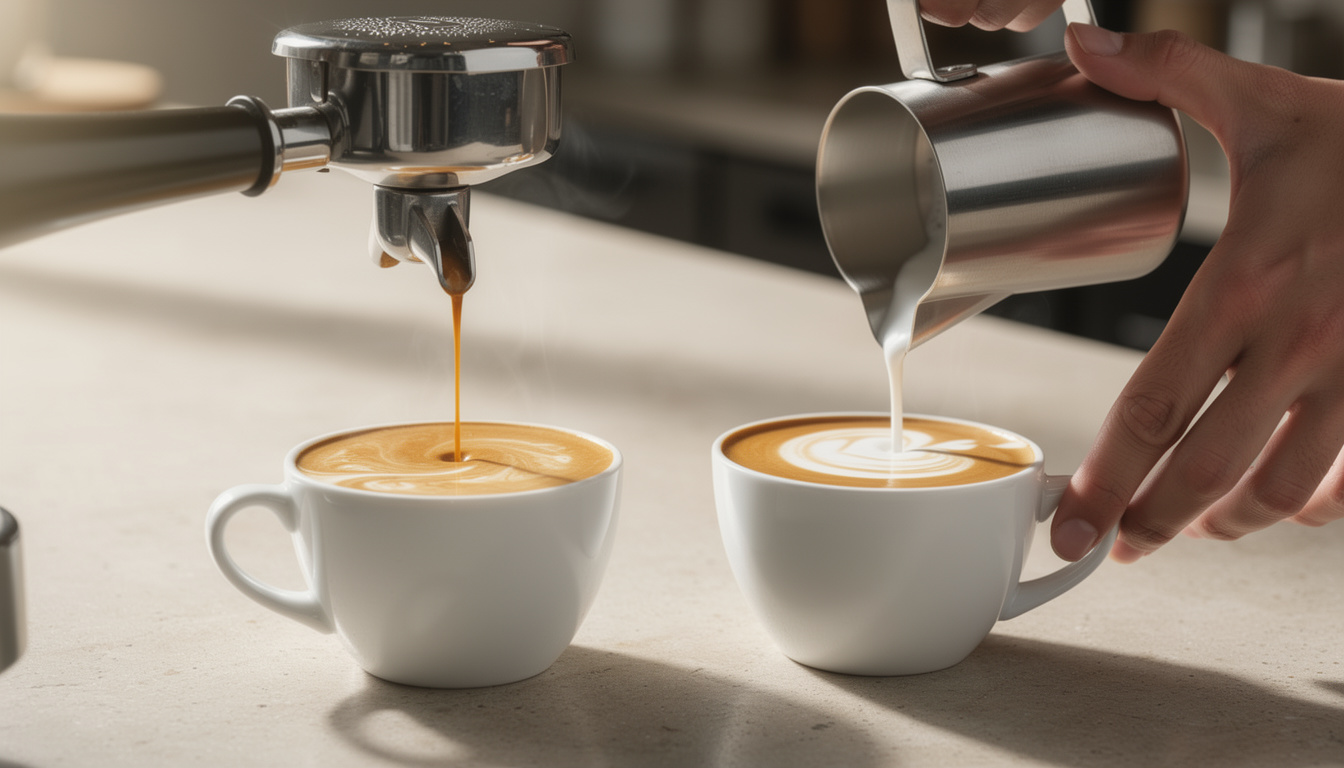
Common formats include 1 kg valve bags, 2-5 kg pouches, and 10-15 kg food-grade totes, with private-label or roaster-branded options and roast-to-ship lead times of 2-5 business days. Weekly or biweekly orders matched to burn rate keep stock inside a freshness window of roughly two to eight weeks post-roast, stored sealed in cool, dark, dry conditions.
Diagnosing Bar Problems and Supplier Standards
Performance drops usually come from several interacting factors rather than one flaw. Inconsistent shots point to burr alignment, grinder drift, uneven distribution or tamping, and coffee under five days old still releasing excess CO2. Sourness points to water temperature drifting outside 92-94 °C, under-extraction revealed by extraction yield and TDS readings, or a batch roasted lighter than spec. Bitterness, hollowness, or fast staling points to broken FIFO rotation, heat near the espresso machine, or exhausted filter cartridges. Logged roast dates, batch codes, and baseline grind settings isolate faults to a specific lot.
A reputable wholesaler backs this with defect and stale-lot replacement under batch tracking, published brew guides with starting parameters for dialing in espresso, barista calibration, water consultations, and early warning before component transitions.
How long should espresso blends rest before service?
Most espresso blends settle after roughly 7-14 days of degassing, while filter-oriented roasts usually open up sooner, at 3-7 days.
How much coffee is needed to test a new blend properly?
Samples of 250-500 g cover cupping, and 1-2 kg of rested coffee supports a realistic espresso dial-in across grinders and milk tests.
Why can a blend taste different between deliveries?
Fresh-crop component swaps, roast-to-roast variance, and differences in roast date at the time of brewing are the usual causes. Batch codes and supplier transition notes help trace the source.
About the Business
VOYA Specialty Coffee is a professional importer and wholesaler that supplies specialty green and roasted coffee beans in bulk to coffee roasters, cafes, and other businesses. The company is committed to sourcing exceptional coffees and helping its clients elevate their offerings.